

June Reading
What I've been reading, doing, loving in June

This is my monthly wrap up where I talk about some of my favourite things from the last month. What I’m reading, enjoying, looking forward to—sort of anything floating my boat.


Here is an overview of how my month went:
I went to Marseille and bought a bunch of books in French
Got to go to a special brunch ahead of the Women’s Prize and it was such a cool experience
I went to Greece and almost died on the ferry from the islands… I was not built to be sick at sea
I went to Cornwall which was so fun because so many stories are set there
It feels like a very special place, and I can see why so many are inspired by itMy euro summer is really in full swing, but that’s kind of the whole point of moving to a place that’s so close to other places I want to visit
Felt like I was scraping myself off the bottom of the barrel in the London heatwave, but it’s so boring to talk about that so I’ll stop here
What I Read
Below is a rundown of every book I read last month. I’ll be adding a star next to my standouts, like a starred review where a star isn’t a 1 to 5 scale, it just means good!
Before the written ramblings, here is a video version of my monthly wrap up if you’re more of a visual person:
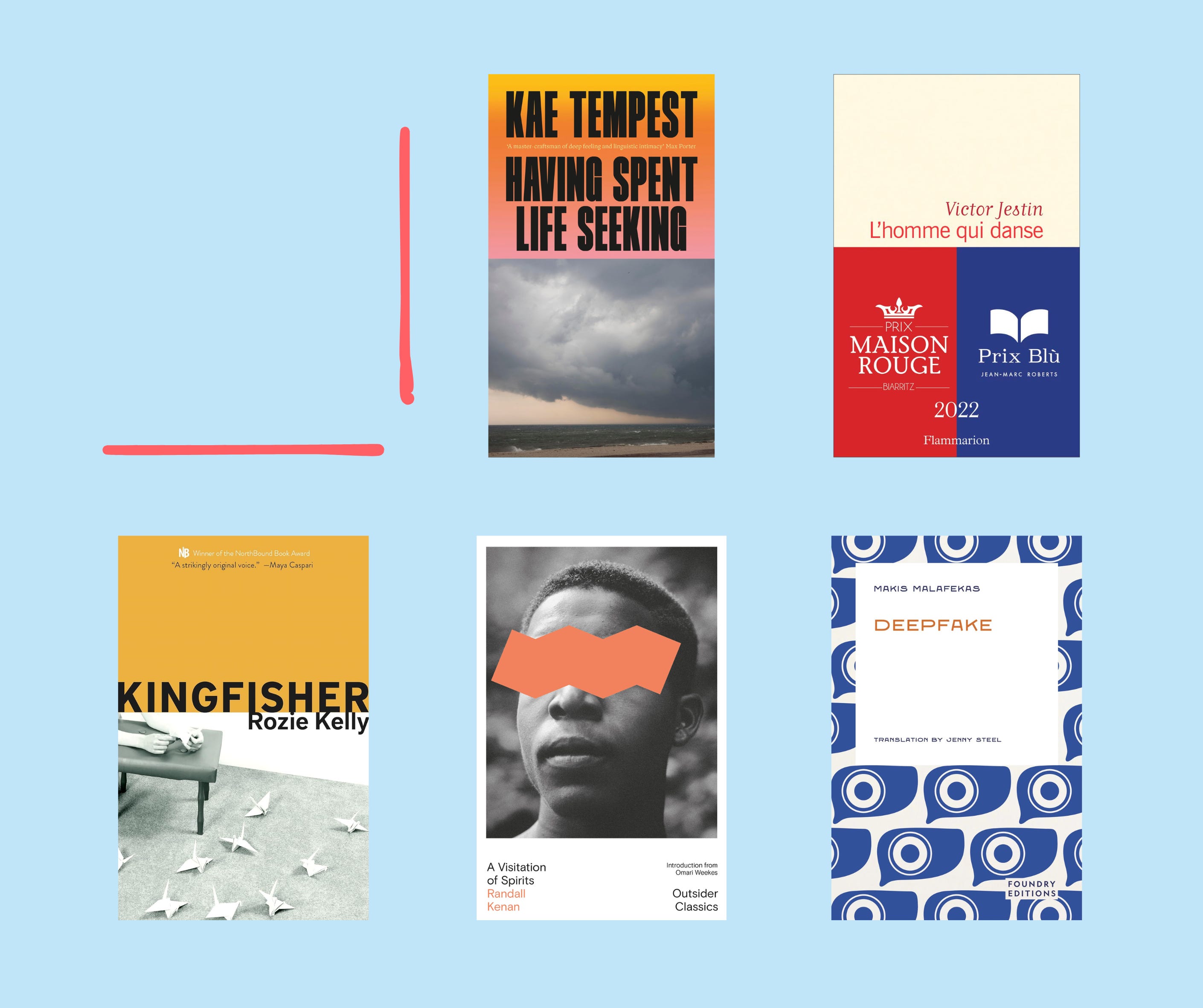
Having Spent Life Seeking by Kae Temptest ★
This was selected as Service 95’s book of the month for June. Although I was already reading it before it was announced, I’d like to think Dua Lipa and I have similar (and incredible) taste. Birds of a feather… read the same books, or whatever.
I’ve known about Kae Tempest for a bit, mostly as a poet and musician. I hadn’t read his first novel, but this one really called out to me.
We enter into this story understanding our narrator is returning to the place they grew up in after more than a decade in prison. At first this feels like our why, but very quickly our why turns into the who of the story. The narration floats from one character to the next, we jump around in time, and it’s all in service of getting to the core of this person.
The world of this novel is steeped in complicated family dynamics, a low income life in an English seaside town, and so much queerness. It explores gender, desire, sex, sexuality, masculinity, and because we get to see the past as well as the present, those things are a kaleidoscope of threads being pulled at in all kinds of directions.
This book is so taut. Reading it feels like holding your breath and nervously twisting a lock of hair. Its build is gradual and masterful, I felt handled in the best way. This is the kind of book I think should get the Fruit Fly treatment (i.e. be at every tube station and get the billboards all around town) because so many could connect to different parts of this but also discover new perspectives in it. I hope to see this novel find many readers.
L’homme qui danse by Victor Jestin ★ (Dancefloor in English)
One thing about me? I take a photo of every book I’m interested in when I visit a bookstore (as evidenced by my only contributions to the notes on this platform “Every book I almost bought at the bookstore today”). This hazy cover of bodies on a dance floor caught my eye at Artwords in Broadway Market, and when I found out it was a French book I knew I’d be tracking down the original.
The premise of this novel is quite simple: we explore one man’s life exclusively as it relates to one specific nightclub he likes to dance at. It’s set in suburban France, and spans a few decades starting in the 90s. Arthur is the kind of man most will feel sorry for, or find odd, or not really connect with. When he goes out, it’s to dance. That’s the only way he knows how to connect to others and to his own person.
His contributions to society are minimal, he doesn’t have any lasting relationships, he is simply a person who has found the place he feels he needs to be.
This book is what I would call vaguely queer. Usually, this would have a negative connotation, but here it felt like a strength. This narrator doesn’t know himself well enough to consider the identities he holds. He was confused and confusing. It was precise but blurry at the same time in a way that I found excellent.
I loved this. It’s a very quick read that I devoured in one day at the beach (it’s the perfect book to bring on the kind of beach day where you have a 2 hour hike before getting to the water).
Kingfisher by Rozie Kelly ★
This book was on the shortlist of the Women’s Prize for fiction this year, and I wanted it to win so bad (was also cheering my girl Lily King on, obviously). I went into it thinking I was getting one thing, but ended up with something bigger and better.
Kingfisher is pitched as a novel about a love triangle. Our narrator is a writer in a gay relationship with his husband, but he starts to develop feelings for an older woman who happens to be a poet. This is the central tension for the first quarter, but very quickly it turns into something else. The relationship between the writer and the poet takes over in the most intimate and beautiful way.
The lines of love, respect and admiration get blurred as the writer falls deeply into this new person. The minutiae of his inner world is dissected every step of the way, and it was fascinating to see this queer man in a homosexual relationship find heterosexual desire. He exists outside of that binary but the way it shifts everything for him was so interesting.
This is a novel about being an artist, which I always enjoy reading. The writing is delicious, perfectly balanced with humour and heart. I loved this.
A Visitation of Spirits by Randall Kenan
This is a book I will have a hard time saying anything about. I can’t say the experience of reading it was enjoyable, but I can say I enjoyed it when I was done with it.
At the core of the novel is the story of Horace, a sixteen year old boy tormented by his own homosexuality, as he is having a crisis of faith and identity. His life and family have deep roots in the church and faith cannot be untangled from his existence. He is slipping into hallucination and losing his grip on life.
The way this story is told feels like a tapestry where all sorts of different people in his life get a turn. There are tangents and moments of silence in direct opposition to the magical realism and violence happening in the narrative. It felt like being jostled around, which made it harder to keep holding on. The structure and the time jumps were a bit distracting all the way until the end.
The final act of this book sings so loudly that it resolved any mixed feelings I had up until that point. There is a chapter in here that I will be revisiting again and again. I’m not in the business of recommending a book that you need to finish to enjoy, but this was the case for me here so do with that what you will.
Deepfake by Makis Malafekas (tr. by Jenny Steel)
When I decided to go to Greece, I knew I would read this there. I think it’s fun to allow my travels to dictate my reading and this happened to be the only Greek and set in Athens book I had on hand.
It follows a washed-up journalist who’s listlessly melting into the fabric of the city of Athens, mostly spending his days watching the Johnny Depp/Amber Heard trial as it unfolds. A mysterious figure in a skirt suit finds him, tells him that his friend has been taken and that in order to save her he must infiltrate a far right group. He manages to become a copywriter for them writing fake news, fake comments, fake anything that gets pumped out into the world wide web. Hijinks ensue and this becomes an absolute spiral of an action novel.
There’s some interesting commentary in here about the far right, image manipulation, AI, corruption, the state of Athens, etc. However, this mostly reads like an action film. It’s successful in that way, but it wasn’t necessarily my cup of tea.
This was more of a commercial crime thriller than I typically read. I’m a fan of Foundry Editions and their selection so my expectation going in was something different. Regardless, I had a fine time with it. Sometimes I have a John Wick or The Transporter or Taxi (the french version, please) phase, and this scratched that same itch for me.
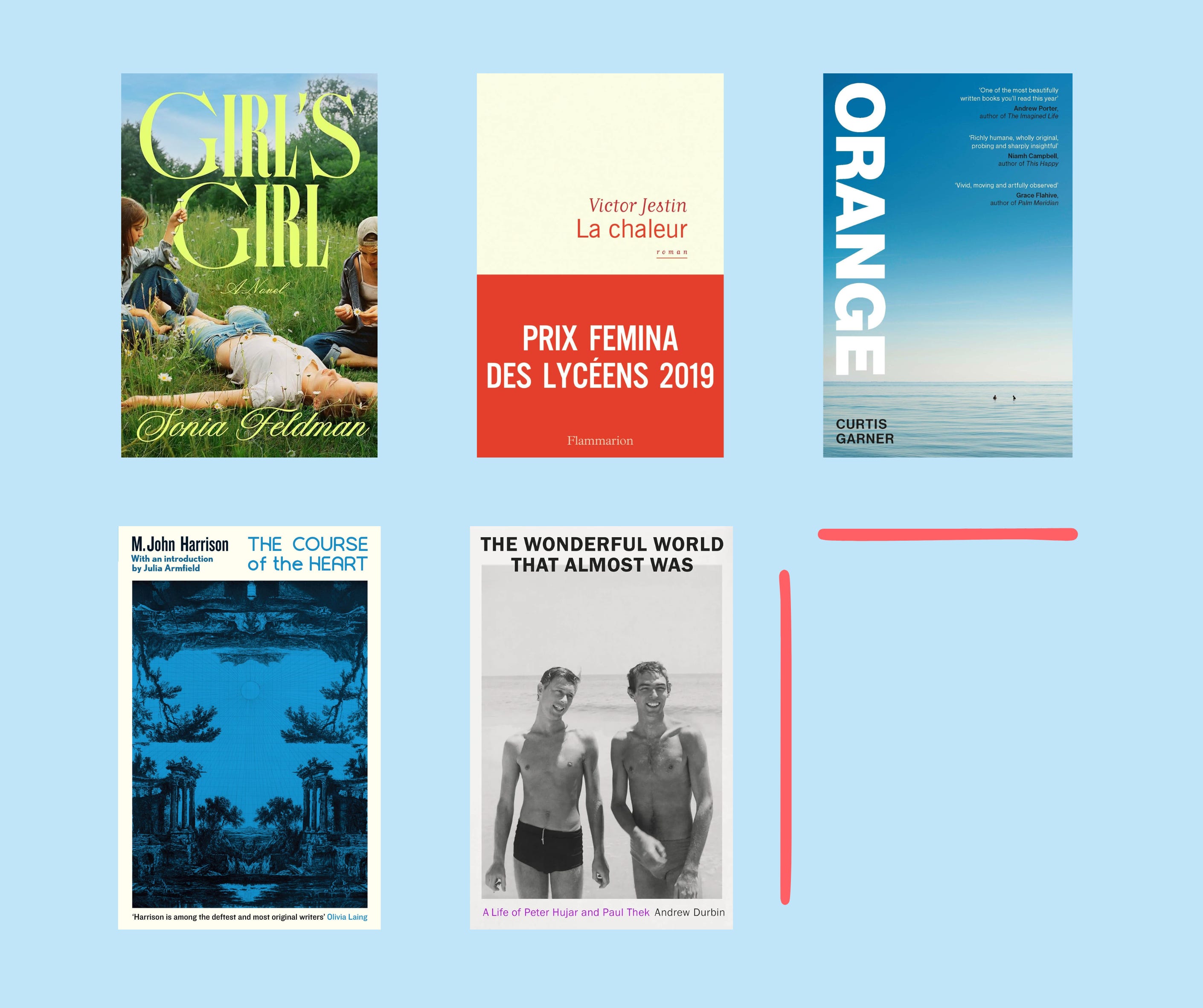
Girl’s Girl by Sonia Feldman ★
The first line of this novel made me drop everything—it was just that good. I even messaged Sonia to show it some love because I know crafting a first line can feel like a tiny sliver of hell. Sometimes a first line is a roadmap for what’s to come, sometimes it’s meant to ensnare, and sometimes it balances both incredibly successfully.
Growing up, I had two best friends—Margaret, whom I had known my whole life, and Eleanor, with whom I was in love, though for years I had no reason to tell my feelings for one apart from my feelings for the other.
Girl’s Girl, p. 3
First line aside, this is a novel about friendship and love and desire, and the times when one bleeds into the next. It’s also the most accurate depiction of what an actual teenage suburban summer feels like (at least, the kind I had) that I’ve ever read.
We follow Mina as she is looking back on the summer her life shifted into the next gear. She is fifteen and on the brink of stepping into the next phase of personhood: into queerness, into the world that exists outside of her cozy bedroom walls. Mina isn’t scared of the road ahead, she just doesn’t have the map to show her the way.
Her whole world is her two best friends, but that summer she develops romantic feelings for one of them. A trio of friends relies on a very delicate balance (who invites who matters, who tells who what matters, who says what in the group chat is life or death) and this was so well executed. Writing about the inherent tension of a three person text chain feels like it would be banal, but here it is delightful. This brought me back to a time when all I lived for was my phone pinging with a new BBM message.
I loved this. It’s a perfect summer read and a perfect queer coming of age.
La chaleur by Victor Jestin ★ (Heatwave in English)
After reading L’homme qui danse in one sitting, I immediately bought Victor Jestin’s first and only other novel. Well, not immediately, because the copy I have was the only available one in all of Marseille… I finally found it after days of scouring every bookstore in the city, and I’m so glad I did.
This follows a seventeen year old boy as his family’s camping holiday in the south of France is coming to a close. On the night before their last day, he watches another boy die, choked by the chains of a swing set. Whether the other boy wanted help or found himself in that situation intentionally is not clear, but the guilt Leonard feels can’t tell if there’s a difference. In a haze of shock, he buries the body on the beach.
That is how this novel opens, and then we see him go through his final day there as he is reeling from what he has witnessed, what he has done. Every interaction is closely examined, his relationships with the other teen campers are litigated, and the parts of himself that made all of this possible are under a microscope.
The novel is a boy’s coming of age, but the lens is dark in a way I’ve never seen. The reader is challenged by right and wrong, the guilt drips from the pages and really gets under your skin. I could not look away from this.
Orange by Curtis Garner
I read this while I was in Cornwall because it’s partially set there, and I’m so glad I did. It helped me understand some of what is discussed in this book. The feeling of a place being so vast and yet feeling confining, it being beautiful but carrying so much pain.
This book is about two boys in two different timelines. The first is 2018, in Cornwall, as they get to know each other over a summer and develop an intimate relationship. The kind of bond that wrecks the chances of all future partners. The second is 2023, in London, as they reconnect over a weekend. What does this time difference mean for them as individuals and what does it mean for them as a unit?
There’s a subversion of the straight boy/gay boy romance trope in this that I found refreshing. It’s a different take on it that feels like it was approached with a modern lens.
While the relationship between the two boys is the core of this novel, the piece I found most compelling was the discussion of place. For one of them, Cornwall was not enough and did not feel right. For the other, London is dizzying and uncomfortable. Every person feels differently about where they belong and it’s so hard to explain to someone else. How heartbreaking to find that the one thing keeping you apart can’t really be helped.
This was great, I’m very happy I finally got to it. And now I have Curtis Garner’s first novel, Isaac, on deck.
The Course of the Heart by M. John Harrison
This is a book that does not deliver on the promise of the premise. It’s not that I didn’t enjoy it, it’s that I wanted it to be so much more than it was.
The Course of the Heart is sold as a book about three Cambridge students who perform a mysterious occult ritual with their kooky professor and then things go wrong and they have to carry that with them for the rest of their lives.
In reality, this is a book about escapism and a futile quest for something larger than yourself. It asks so many more questions than it answers and it pulls on threads that don’t serve the plot. I think the point of this novel was to leave the reader feeling disconnected from the idea of utopia.
As the novel unfolds, it’s revealed that the ritual was meant to give the students access to another plane of existence that is a constant state of euphoria. This quest will be the thing that has them looking over their shoulders for decades. One of them has visions, one of them has a little creature following him around, and one of them smells roses everywhere. Whether any of this is real or not is never clear. It bends genre from magical realism to mystery to dark academia to plotless literary fiction, but doesn’t ever stay too long in either.
Nothing happens, but so much happens too. It was frustrating to read, not nearly as enjoyable as I thought it would be given the logline… And yet!! I still found it compelling. Maybe I have some reading masochism tendencies, but I like when a novel irks me and backs it up with great writing.
From my understanding, this is Harrison’s strangest book—his departure from sci-fi into something a bit more nebulous. I’m not opposed to reading another one of his books, but I think I will hold off for a little while.
The Wonderful World That Almost Was by Andrew Durbin
I don’t think I’ve read a biography in years, but I really enjoyed this one. It feels like the Big Cool Gay Book of the summer.
This recounts decades in the lives of two queer American artists, Paul Thek and Peter Hujar. We follow their lives from the 1950s all the way to the 1970s, with pitstops in their childhoods and deaths to AIDS. Their story is told together because they are enmeshed in one another. At times peers or friends, other times lovers or enemies, we see every step of their shared existence through these important decades.
They had proximity to the likes of Susan Sontag, Fran Leibowitz, and so many contemporaries who were putting in place the building blocks of what being an artist would mean in the decades to come. This book is so much about being an artist and so much about being queer. The experience of being a queer man shifts so drastically over the course of this book and that’s reflected in both of them as well as their work.
I’m not a big biography reader, but something I really loved about this one was the informed speculation. The book was written with notes, letters, interviews, testimonials of friends, but there are moments no one was privy to. What was their last conversation like? Why did they start seeing each other? Andrew Durbin hypothesizes based on all of the knowledge he’s collected and it was so great to read.
Paul Thek and Peter Hujar are artists that I’ve known about for so long without being able to name them. As I was reading this, it felt like deja vu, I kept thinking that I inevitably would’ve found my way to them sooner or later. I loved spending time with them.
On My Bedside Table
A dispatch from my bedside table and the books that litter it, hoping to be read soon.
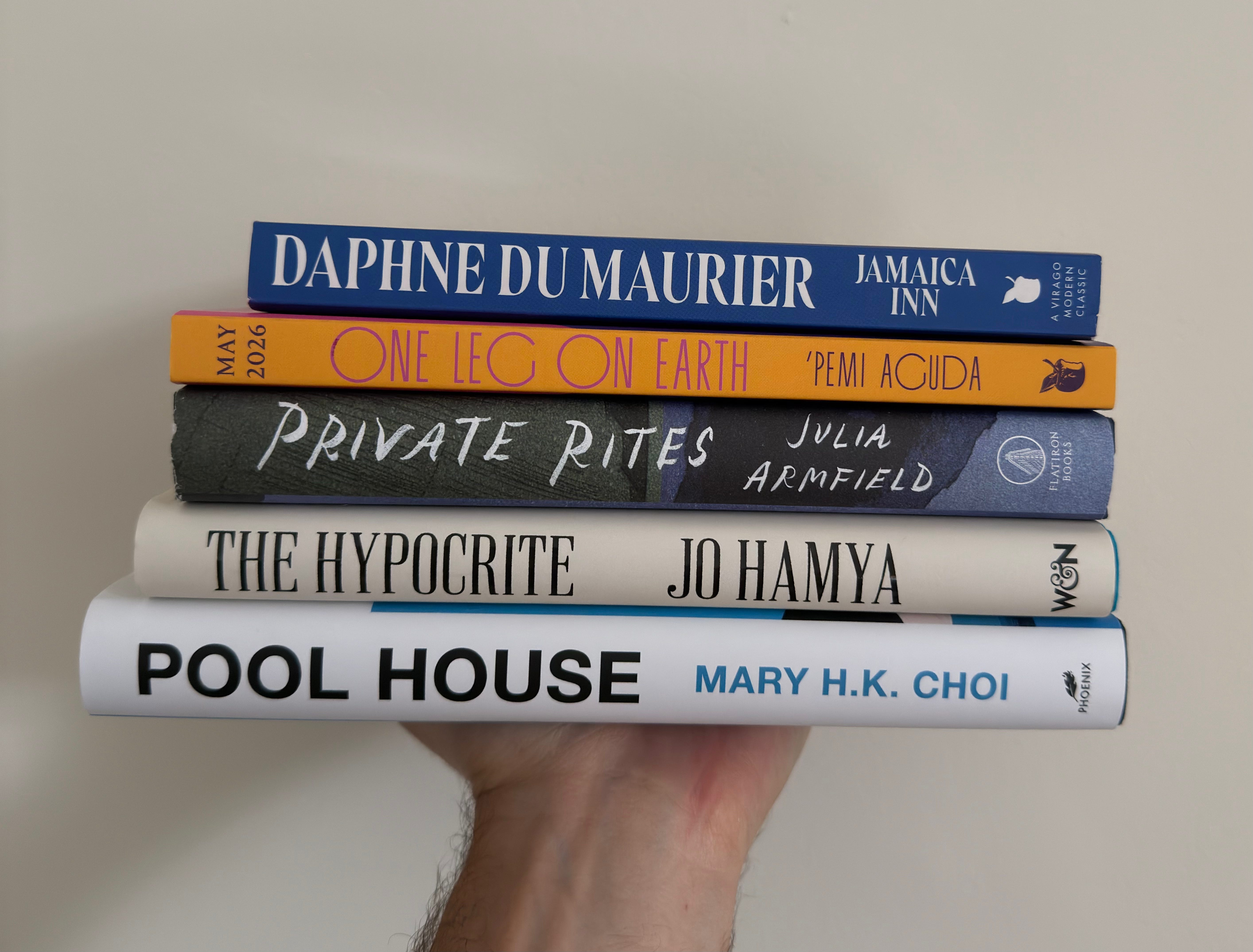
Jamaica Inn by Daphne du Maurier, a mystery of murder and smuggling set in a Cornish inn
One Leg on Earth by ‘Pemi Aguda, a woman starts her life over in Lagos just as all the pregnant women of the city begin walking into the ocean
Private Rites by Julia Armfield, three estranged sisters reconnect after the death of their father in the midst of apocalyptic rain
The Hypocrite by Jo Hamya, a woman writes a play about the summer she spent with her writer father as he fell from grace
Pool House by Mary H.K. Choi, the complex relationship between a mother and daughter who move into their pool house because they can’t afford their main house anymore
Have you read any of these? Are any of these non-negotiables? Are any of them skippable?
What did you read and love in June?!
Let me know in the comments!
That’s been my month! Typos (if any) were made on purpose, obviously.
Until next time 🤠
Love this review of Having Spent Life Seeking - this is what has convinced me to get hold of a copy (crucially you are much more influential to me than Dua Lipa x). Also love the love for Girls Girl bc I have a copy! Interested to see if I will like it but ultimately I do like the volatility of young girls friendship
oh kingfisher WILL be seeing me…. luved this eurosummer baddie