

January Reading
and my Book of the Month pick!

This is my monthly wrap up where I talk about some of my favourite things from the last month. What I’m reading, enjoying, looking forward to—sort of anything floating my boat.


Here is an overview of how my month went:
I moved to London
To be frank, it’s been a whirlwind and it’s the only thing worth noting.
The lead-up to the move was dizzying, but now, on the other side of it, things have fallen into place very nicely. I feel settled, I feel good, and I feel excited about what this city has to offer.
What I Read
Below is a rundown of every book I read last month. I’ll be adding a star next to my standouts, like a starred review where a star isn’t a 1 to 5 scale, it just means good!
Before the written ramblings, here is a video version of my monthly wrap up if you’re more of a visual person:
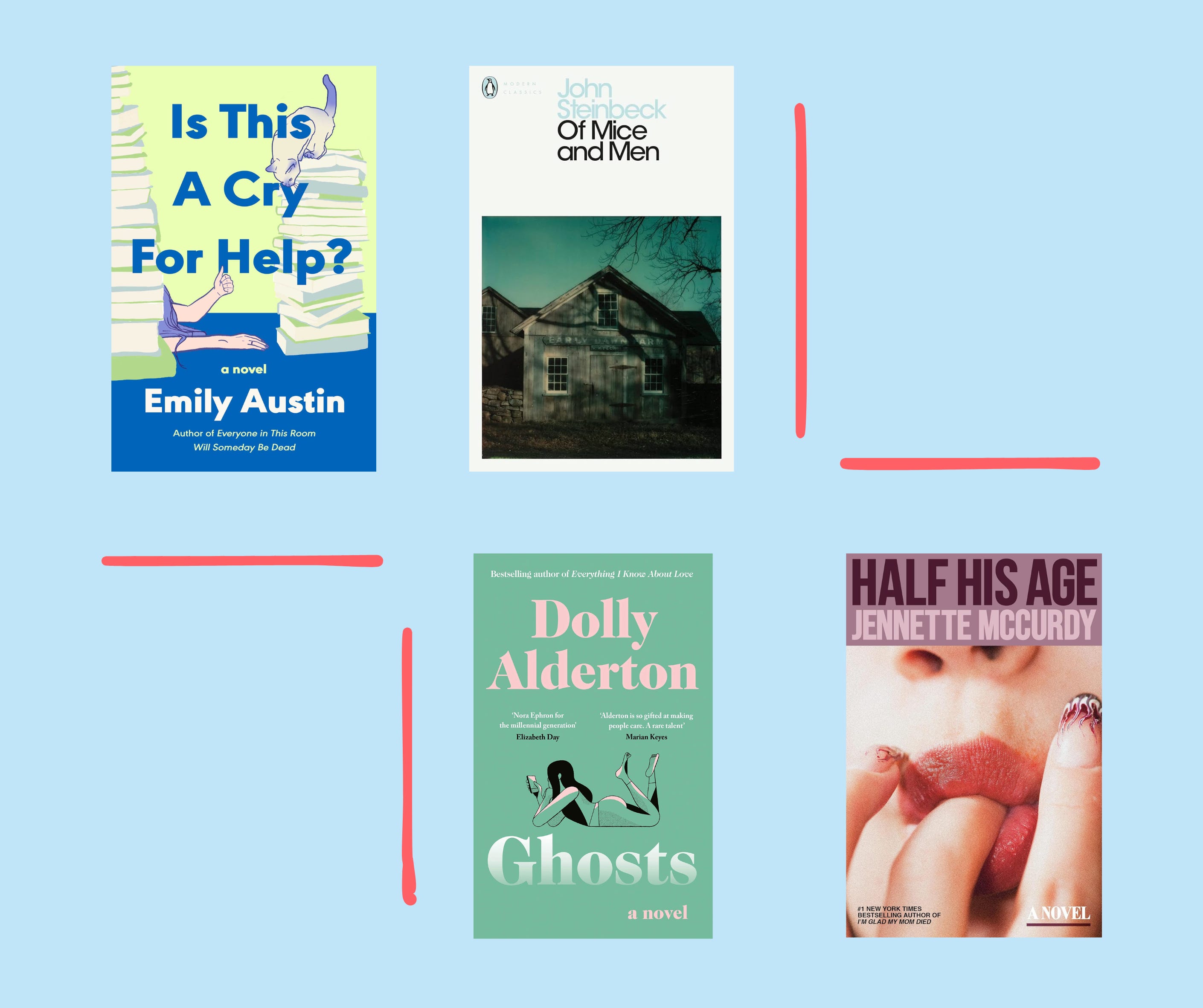
Is This a Cry for Help? by Emily Austin
This book is about a queer librarian, Darcy, who returns to work after a mental health episode. Once back, she is easing into the world again but is confronted with cancel culture, grief, guilt, morality, and a mob of conservatives outside her workplace.
While Darcy’s library branch is under fire from public outcry, she is reeling from the death of her ex-boyfriend. The grief she experiences is mutable and resonant. There’s a really compelling through-line of comphet and what it was like for her to default to being with a man. All of this adds to her nuanced experience of grief and guilt, and that was my favourite part of the novel.
Emily Austin has created a niche in literary fiction: She writes about mental ill queer women like nobody else. Her character studies are exacting, the elements of the contemporary world she’s able to weave in are always compelling, and the texture of her voice is so singular. But, with that singularity inevitably comes expectation and likeness.
Don’t get me wrong, I love Emily Austin and I think her books are great. I’ve just found myself feeling similarly when reading her books. This likely has to do with the fact that I’ve read them all in the span of a few years. I might have to skip her next release and wait a while in order to enjoy it fully.
Of Mice and Men by John Steinbeck
This is a high school classic. I read it when I was twelve—you probably read it when you were twelve—but I didn’t remember it much. Many of the people I engage with about books have reread or have floated the idea of rereading East of Eden (another high school Steinbeck I haven’t the faintest memory of), and I wanted to dip a toe into his work before diving into the deep end.
Of Mice and Men is about two friends: George is small and smart, Lennie is big and “slow.” They are labourers travelling across California from field to field, with a dream of one day owning a piece of land and a house. This takes place in the short time between them arriving to their latest job and the act of violence that ensures their dream will never come to be.
Responsibility and morality are at the forefront of this story. It also shades in the tapestry of working class Americans during the great depression and examines the very loud presence of racism.
Now, this isn’t an indictment of the book itself (product of its time etc.) but I was surprised that everyone I know read this in high school despite the amount of racial slurs, ableism and slut-shaming. Does anyone know if this is still required reading?
My reading of this fell quite flat. Maybe it was a mix of high expectations and me not really connecting with the subject matter, but this didn’t resonate with me. When I read classics from Toni Morrison or James Baldwin or John Williams, I find myself being drawn in by the language even when (in Williams’ case) the premise doesn’t speak to me as much. I didn’t get that here.
This isn’t a really insightful take, but that’s because I was left sort of lukewarm to it. It’s not that I didn’t understand what it was doing, and how it challenges the concept of innocence. However, I can’t say I was a fan of the victim-blaming that happens at the end—the treatment she receives was enough to sour the read for me.
Ghosts by Dolly Alderton
I read this book a few years ago and I remembered really loving it. Ghosts falls in this elusive upmarket category, where the plot is more commercial and the writing leans more literary. For me, this sits alongside Lily King when it comes to genre.
This book is about Nina, a food writer in her early thirties who can’t help but notice the passage of time. Her friends feel foreign to her, they’re having children, moving out of the city, have less time for her. Her parents are getting old and her father’s dementia is getting worse.
All of this is happening while she is dating quite unsuccessfully. Starts and stops, exes floating around, ghostings aplenty… It’s a very relatable experience of trying to find partnership in the modern world.
On this read, I still really enjoyed it but I wasn’t head over heels like I was the first time. Dolly Alderton’s writing is quippy and sharp and feels like an old friend is telling you a story. I’ll always be enamoured by her ability to balance heart and humour.
I was also surprised to find that 75% of this novel takes place in dialogue. That’s quite impressive, especially to have it feel lived-in like it does in Ghosts.
Half His Age by Jennette McCurdy
This is a tough one to talk about. My preface to this review is a reminder that this is my opinion, and, in this case, I couldn’t separate my opinion from this book’s context.
Half His Age is a follow-up to an extremely popular memoir, was written by a famous person, already has a ton of marketing power behind it… All of this means that I couldn’t help but feel there is a responsibility (from the author and all the other hands this has gone through before publication) to treat this subject matter with the utmost care given how much attention it will receive. This will inevitably be a defining novel on the topic of grooming and inappropriate relationships just by virtue of popularity.
The novel is about Waldo, a 17-year-old girl, who pursues a sexual relationship with her creative writing teacher, a 40-something married man. Waldo has a negligent and immature mother who doesn’t treat her well. She has a compulsion to consume, shopping online constantly, spending money she barely has to buy things she knows will end up in landfills. Waldo is sardonic and smart, readers will recognize a similar tone to the one in I’m Glad my Mom Died.
A piece of this novel I wish was explored further is the examination of a modern day Mall Teen with a horrible shopping habit. Social media, class, self-esteem, the pressures of being a young girl, the convergence of all of this in one person, that was the most interesting part to me.
I did not really like this book. I don’t think the writing is bad by any means, in fact, the voice is one of its strongest elements. I just kept thinking we would get to a point in the novel where examining this kind of relationship would feel justified—specifically for how much graphic sex is depicted—but it never got there for me.
I kept thinking how 2016 this novel felt. Not in setting, but because of it would’ve been so ground-breaking a decade ago and reading it today just doesn’t hit the same.
I wanted something new added to this narrative and I didn’t find it. Shock value almost felt like it was the point of the way this story was told, and that didn’t work for me.
I’m eager to see what others think. I can certainly appreciate a big swing, it’s a shame this one happened to miss me.
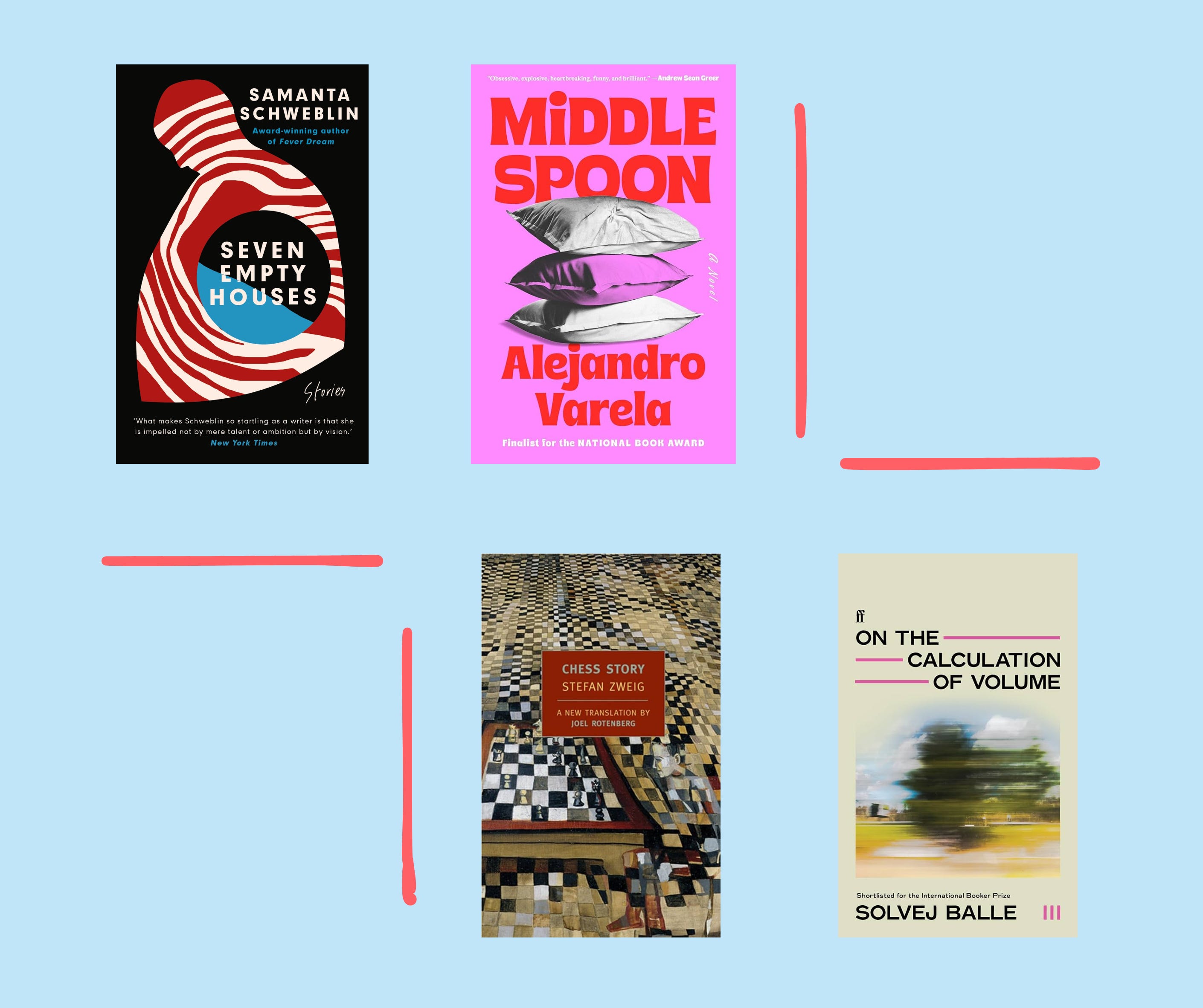
Seven Empty House by Samantha Schweblin (tr. by Megan McDowell)
This is a collection of short stories from one of the best literary horror writers… ever. I read Fever Dream by her previously and really enjoyed it. This was no different.
Each story offers a mundane domestic setting and a banal circumstance, but the horror seeps into each of them in a masterful way. In some cases, you almost don’t notice the eeriness until it’s in the rearview.
My favourite story in this collection is a novella-length one in the middle, Breath from the Depths. It’s about a woman losing her grip on her world. She is sick and her memory is slowly slipping out of reach. When a woman and her son move in next door, her reality becomes even more slippery.
Like with every collection, some stories work and some aren’t as strong for me. Seeing as my favourite was the longest, I think I’m going to look into her longer works next. Schweblin scratches a very specific itch and it’s one I almost always have.
Middle Spoon by Alejandro Varela ★
Alejandro Varela wrote one of my favourite books, The Town of Babylon, so needless to say, I was very excited about this one. I’ve had it for months, but every time I’d sit down to read it, I couldn’t quite commit to it. Determined to do so, it was one of the 13 books I carried with me as I moved across an ocean. Thankfully, this time it worked.
This is an epistolary novel told entirely through emails. It follows a gay man with a loving husband, two children, and a boyfriend who has just dumped him. His frenzied rumination after the breakup recount their life together, his life with his husband, the narrator’s quest to queer the family dynamic, and also pokes holes in the fabric of modern society in America.
This book’s construction is so brave and executed to perfection. It circles the drain of heartbreak endlessly, almost to a point where it feels impossible to break new ground, and yet it continues to do so. It’s especially impressive considering it does not shift it’s format once.
The dissection of polyamory and the many complexities that it can create for a family unit was something I’ve never seen discussed in this way. Gay men, age gaps, love, guilt, responsibility, it’s all in there, balanced and delicious.
I could read Alejandro Varela’s grocery list.
Chess by Stefan Zweig (tr. Anthea Bell) ★
Similarly to Of Mice and Men, I am very eager to read Zweig’s longer novel, Beware of Pity, but figured I should start small. This is a novella that he turned in to his editor just days before taking his own life… Chilling when finding out how much of it mirrors his own experiences.
It’s about a bunch of men on a ship travelling from New York to Buenos Aires in the 1940s. When they find out that a world champion chess master is on the vessel with them, they seek him out and attempt to beat him. One stranger emerges from the crowd to help these men with his skillful knowledge of chess strategy.
The narrator of the novella sits down with that stranger and gets told his life story. A story of a man fleeing Austria to escape the Nazis, pushed to the edge of mental collapse where his only way to keep his mind engaged was to learn the game of chess.
I loved this despite it feeling like a Boy Novel™️ (the kind of novel I’d recommend to a straight guy… not a bad thing, I just don’t read many of those!). It was completely engrossing, I read it in a day. The dissection of the game of chess paired with the slow descent into a broken mind was expertly crafted.
The brevity of this book works in its favour, it was like a blink that you can devote your entire self to reading. I’m very excited to get to Beware of Pity soon!
On the Calculation of Volume III by Solvej Balle (tr. by Sophia Hersi Smith and Jennifer Russell) ★
This it the third instalment in this series, and I am still just as hooked. If you haven’t read the first two, you might want to skip this review as it’s impossible to speak about this book without spoilers.
In this tome, our narrator Tara Selter has found someone who is like her: a man stuck in time, on the eighteenth of November. Together, they go about this day, find the contrasts between their experiences, and question what it means to exist in this loop together.
I love how this offers a new perspective on the problem Tara faces, and how it considers the implication of gender. How does a man face this situation? How does his experience differ from Tara’s? It was something I hadn’t thought about in the first two, so it was very interesting to see it play out here.
We also see Tara continue to look back and she moves forward. Her reality has shifted for the first time in years, and yet a part of her wants to keep an eye on the past.
I’m so excited to see where this will go and am endlessly impressed with Solvej Balle’s ability to continually reach into every nook and cranny of this person.
On My Bedside Table
We’re doing things a little differently this month because this dispatch is sponsored by Book of the Month!
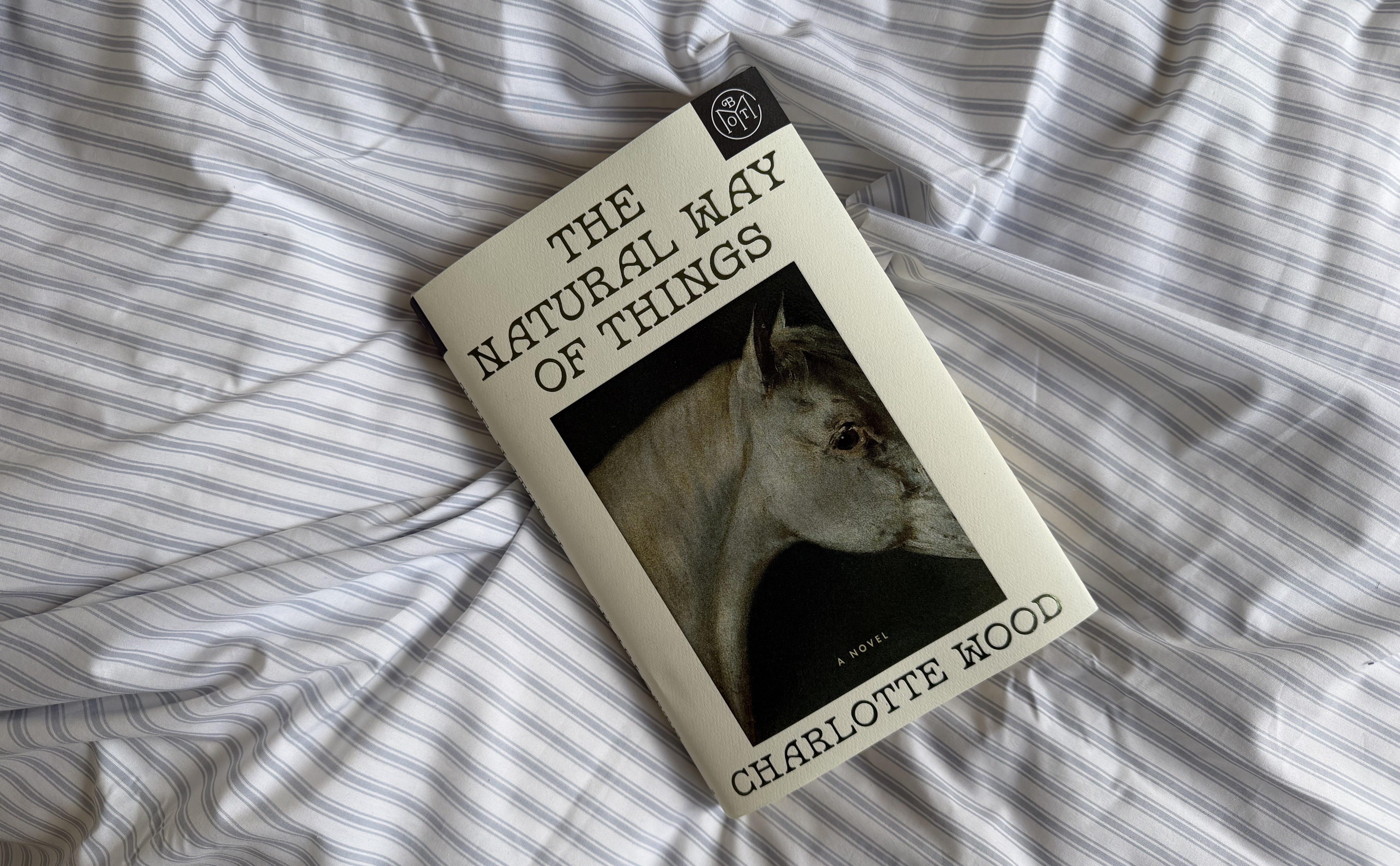
When I heard Book of the Month was launching a new collection for fans of weird, character-driven literary fiction, I already knew I was going to be a fan. The collection is called The Offset and it might not be for everyone, but it’s certainly for me. Litfic readers, we’re eating good!
The Natural Way of Things by Charlotte Wood is the first title from The Offset. I was so excited to discover another book from Wood after she was shortlisted for the Booker Prize last year.
It’s about a group of women who wake up from a drugged sleep, imprisoned in a rundown building in the middle of the Australian desert. They are there with eight other women, and soon realize the link between all of them is a salacious scandal with a powerful man.
It’s a sharp challenging read that examines misogyny, power dynamics, human resilience, and violence.
You can click here to join me and get your first Book of the Month book for just $9.99 and a free hat of your choosing!
What did you read and love in January?!
Let me know in the comments!
That’s been my month! Typos (if any) were made on purpose, obviously.
Until next time 🤠
epistolary novel you say…..? 👀 adding to cart immediately!!!
I love your titanic shirt!